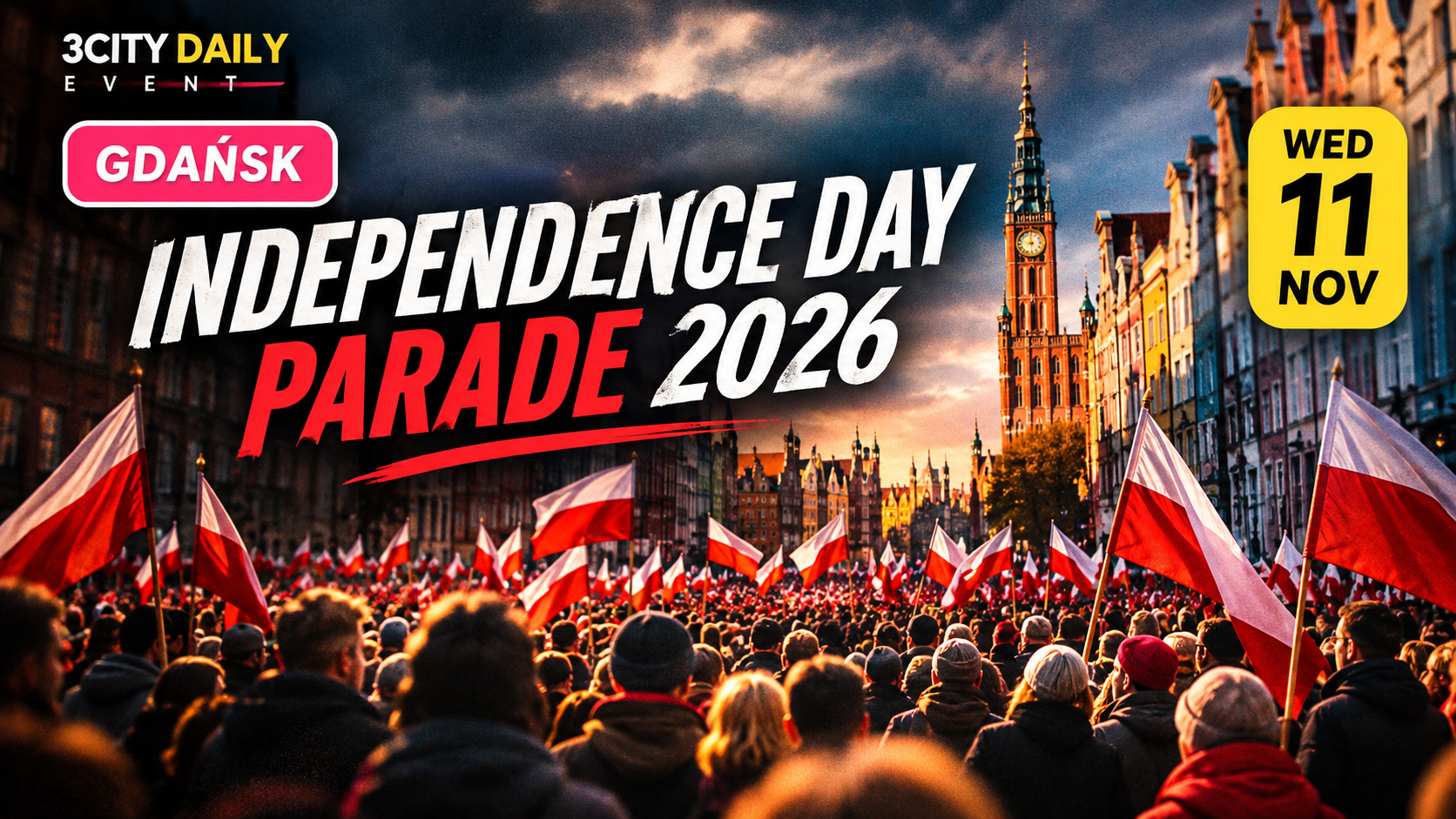
Gdańsk is getting ready to turn red and white. On Wednesday, 11 November 2026, the city’s 24th Independence Day Parade is expected to bring 20,000–30,000 people into the streets for a celebration of Polish freedom and togetherness.
Participants gather from 9:00 AM on Podwale Staromiejskie, with the march setting off at 10:30 AM. The procession winds through the historic centre and finishes at the Green Gate, where the national anthem and a huge community photograph are planned for around noon.
Elsewhere in the city, look out for patriotic concerts, guided walks, exhibitions, a carillon performance and special food offerings. Different generations, different opinions, one shared celebration. No tickets, no barriers — just Gdańsk showing its colours.
Event details
Date: Wednesday, 11 November 2026 Assembly: 9:00 AM Parade starts: 10:30 AM Starting point: Podwale Staromiejskie, Gdańsk Finish: Green Gate / Długi Targ Admission: Free
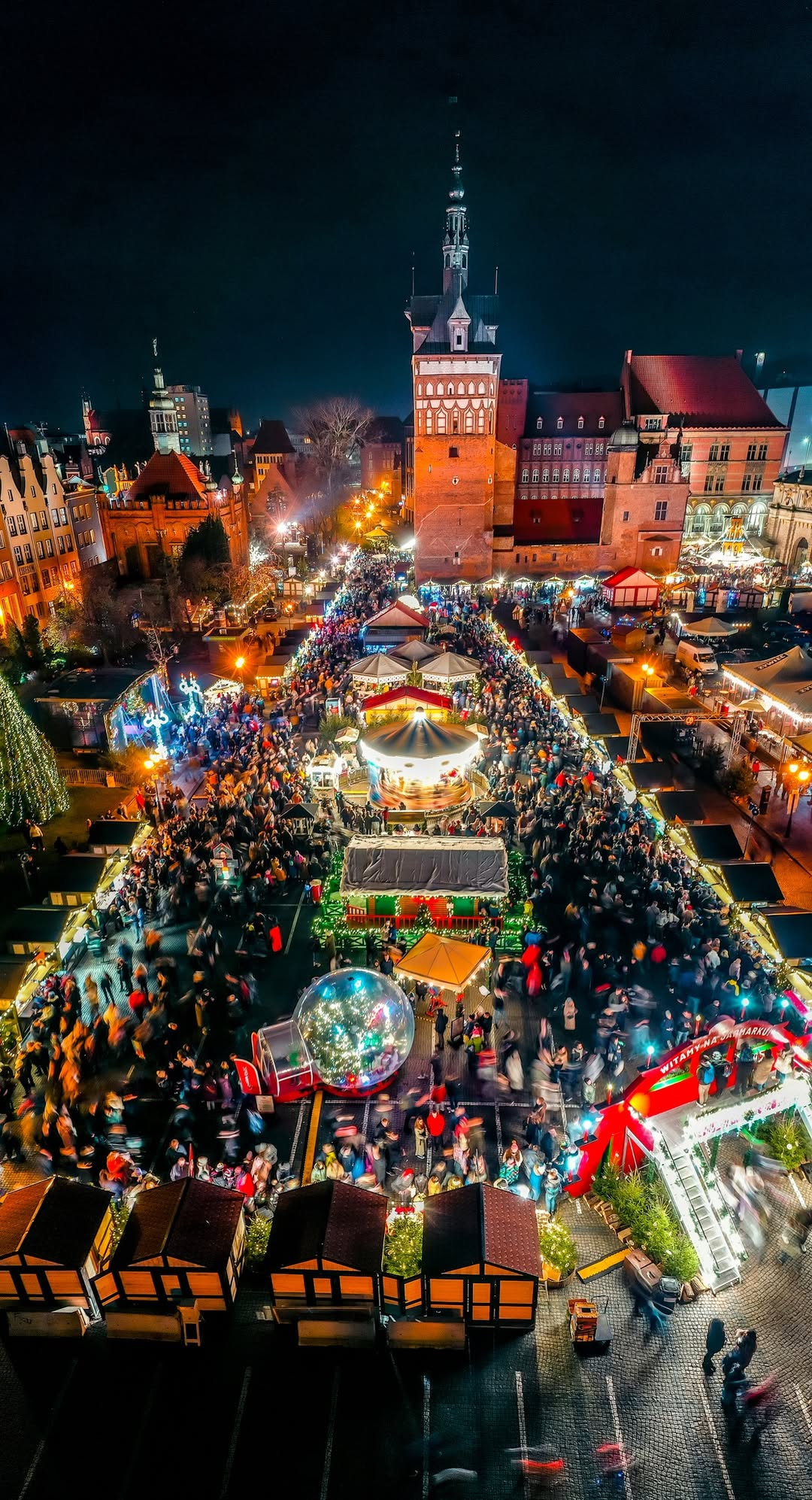
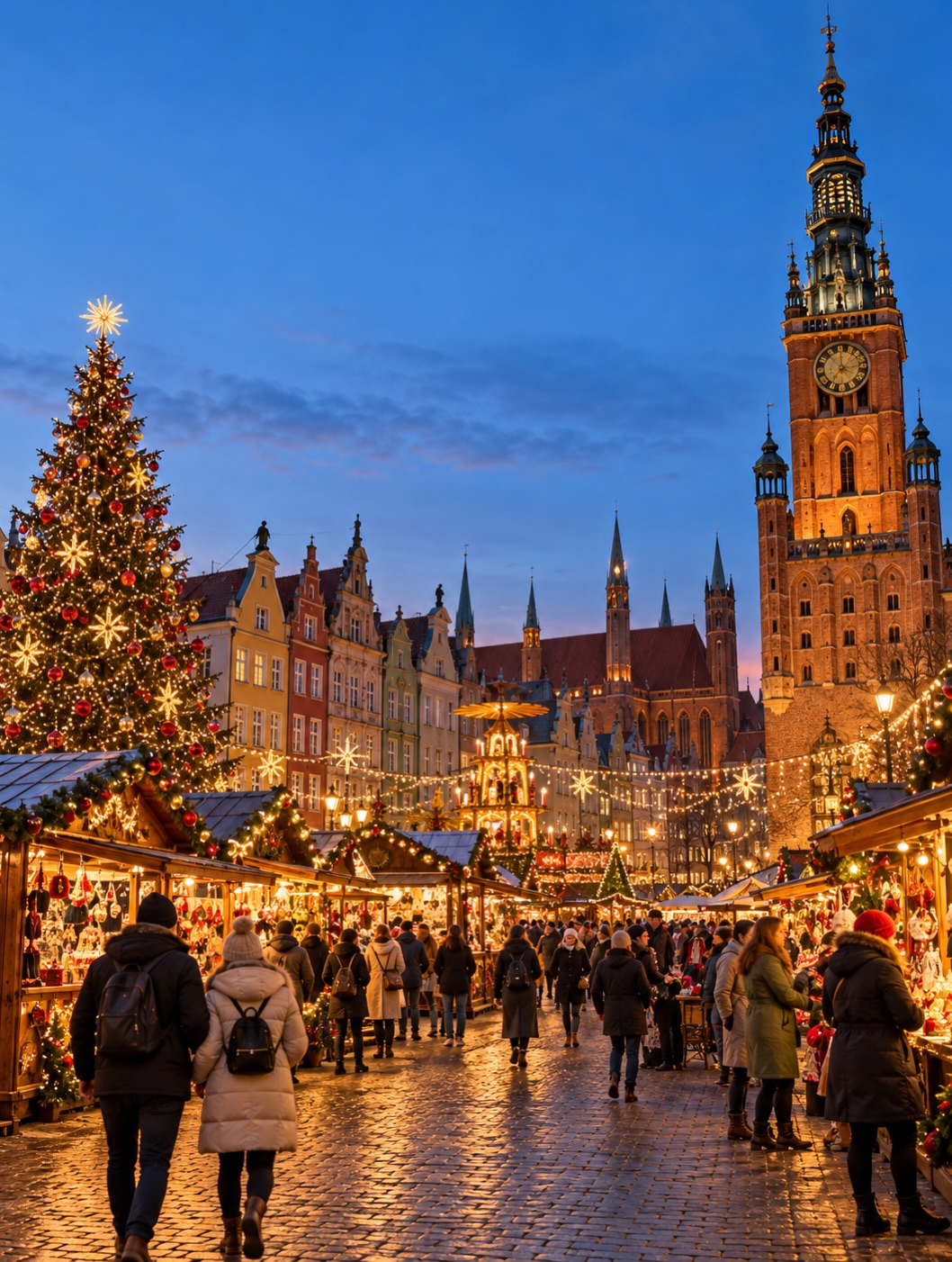
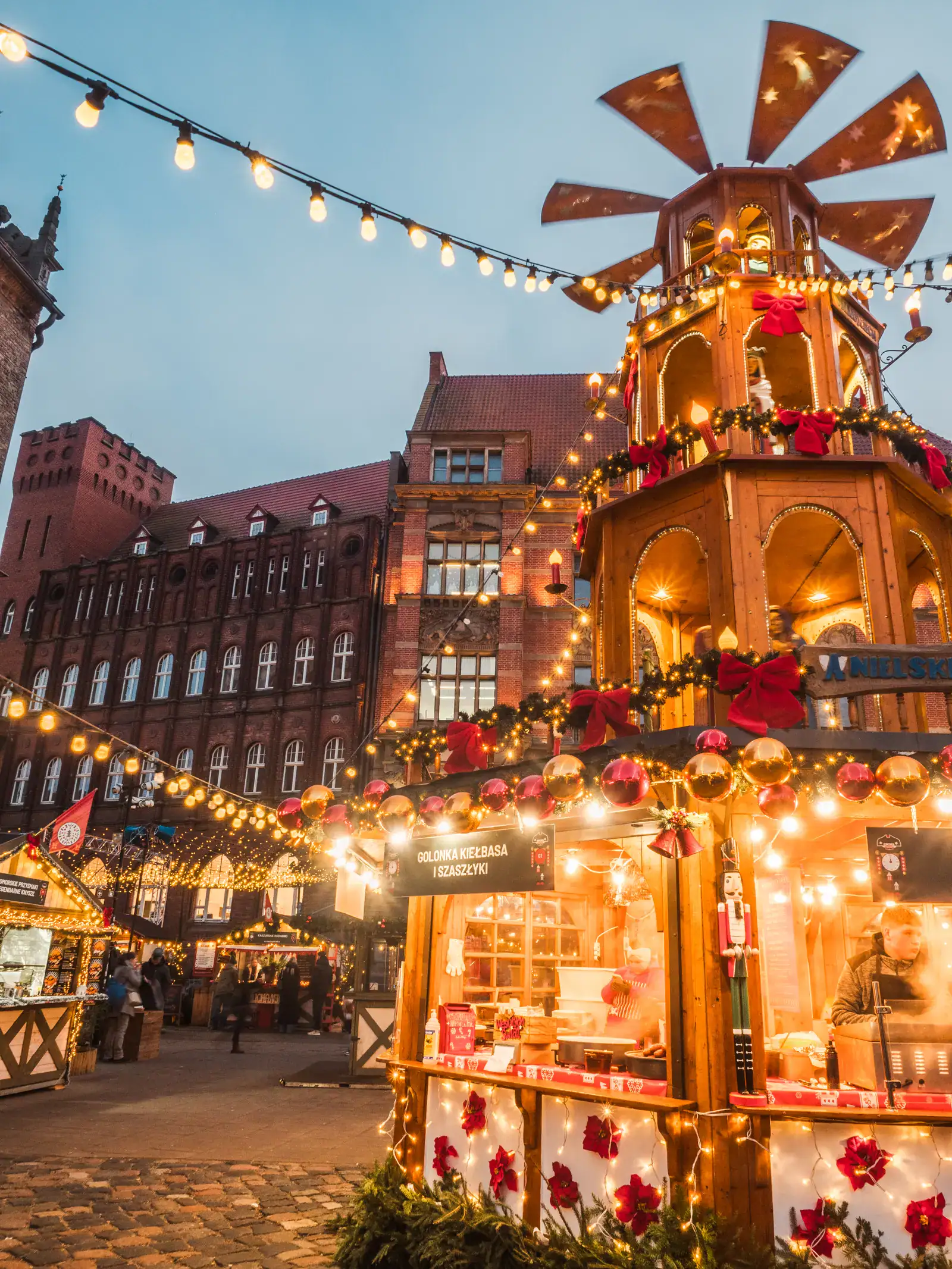
Europe’s best Christmas market is back. And Gdańsk isn’t messing around.
More stalls, new attractions and enough Christmas lights to make your electricity bill cry. Gdańsk Christmas Market returns November 20 and runs until December 23, with a bigger festive playground taking over the Old Town and beyond.
After winning Europe’s Christmas market crown, Gdańsk has something to prove. And this year, it’s going all in.
More Food, More Stalls, More Christmas Madness
This year’s theme is “Celebrating Together”, and organisers are making things bigger.
Bogusławskiego Street is getting a Magic Train Corner, featuring a food train built from shipping containers. Meanwhile, Tadeusz Polak Square will host a new Theatre Corner, complete with a small food area.
Extra stalls will also appear along Ogarna and Garbary Streets, creating a circular route through the market.
Translation? More food, more exploring and more chances to lose your friends somewhere between the pierogi stalls and the Christmas decorations.
The Great Armoury Gets Festive
The historic Great Armoury is joining the fun again, with stalls selling art, fashion, crafts and handmade gifts.
Perfect for finding something original for Christmas. Or buying yourself something while pretending it’s for your mum.
We won’t judge.
Christmas Beyond the Old Town
For the first time, festive events will also reach Przymorze Wielkie and Pruszcz Gdański, including an Alice in Wonderland illumination park at Faktoria Cultural Park.
There will also be new collectible Christmas mugs and an expanded deposit-return system.
Because apparently collecting mugs is now a competitive Christmas sport.
Drivers, You’ve Been Warned
Preparations begin in early November, bringing some traffic changes.
Bogusławskiego Street will become one-way and close to cars from Friday at 5 pm until Sunday at 11 pm. Parking will also be limited around Bogusławskiego Street and Polaka Square, with alternative spaces for residents on Rzeźnicka Street.
Basically, leave the car at home if you can. Your blood pressure will thank you.
The Verdict: Gdańsk Is Going Full Christmas Mode
More stalls, new attractions, festive lights and enough food to destroy your December diet before Christmas even arrives.
Gdańsk Christmas Market 2026
When: November 20 – December 23
Where: Gdańsk Old Town and selected additional locations
What’s new: Magic Train Corner, Theatre Corner, extra stalls and events beyond the city centre
Our advice? Come hungry, dress warm and wear comfortable shoes. You’ll probably walk twice as far as planned.
Christmas is coming, Gdańsk. And apparently, so is half of Poland.
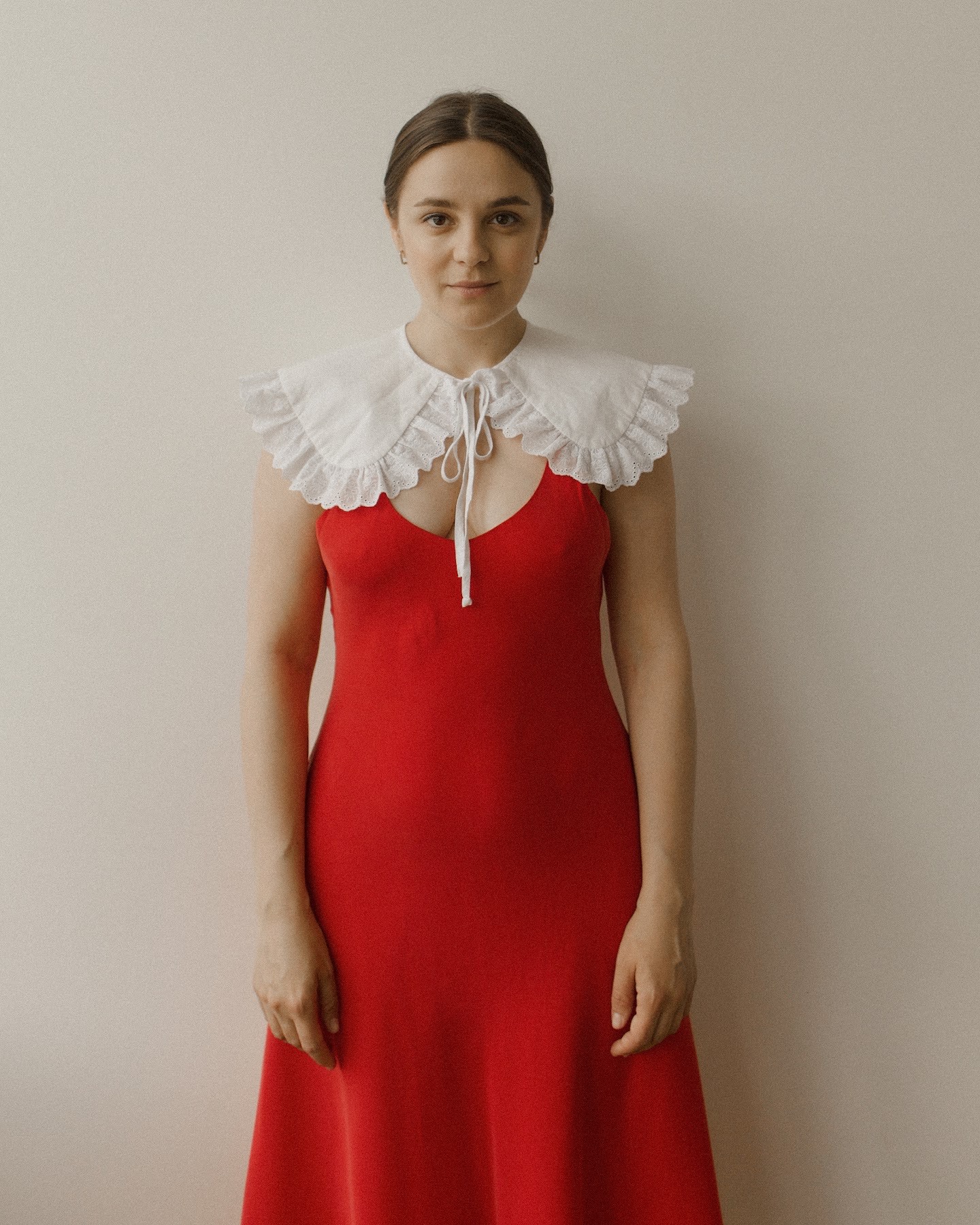
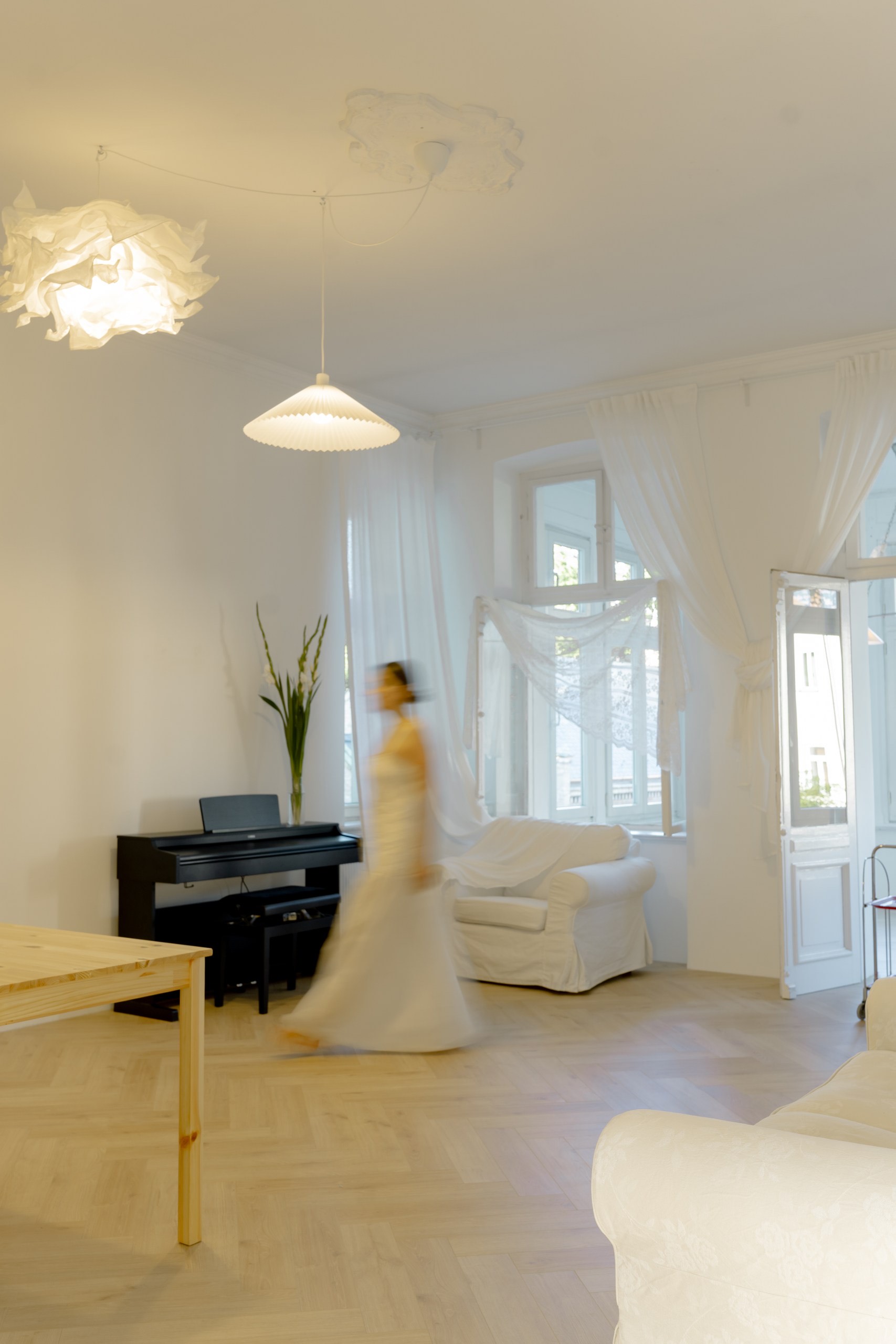
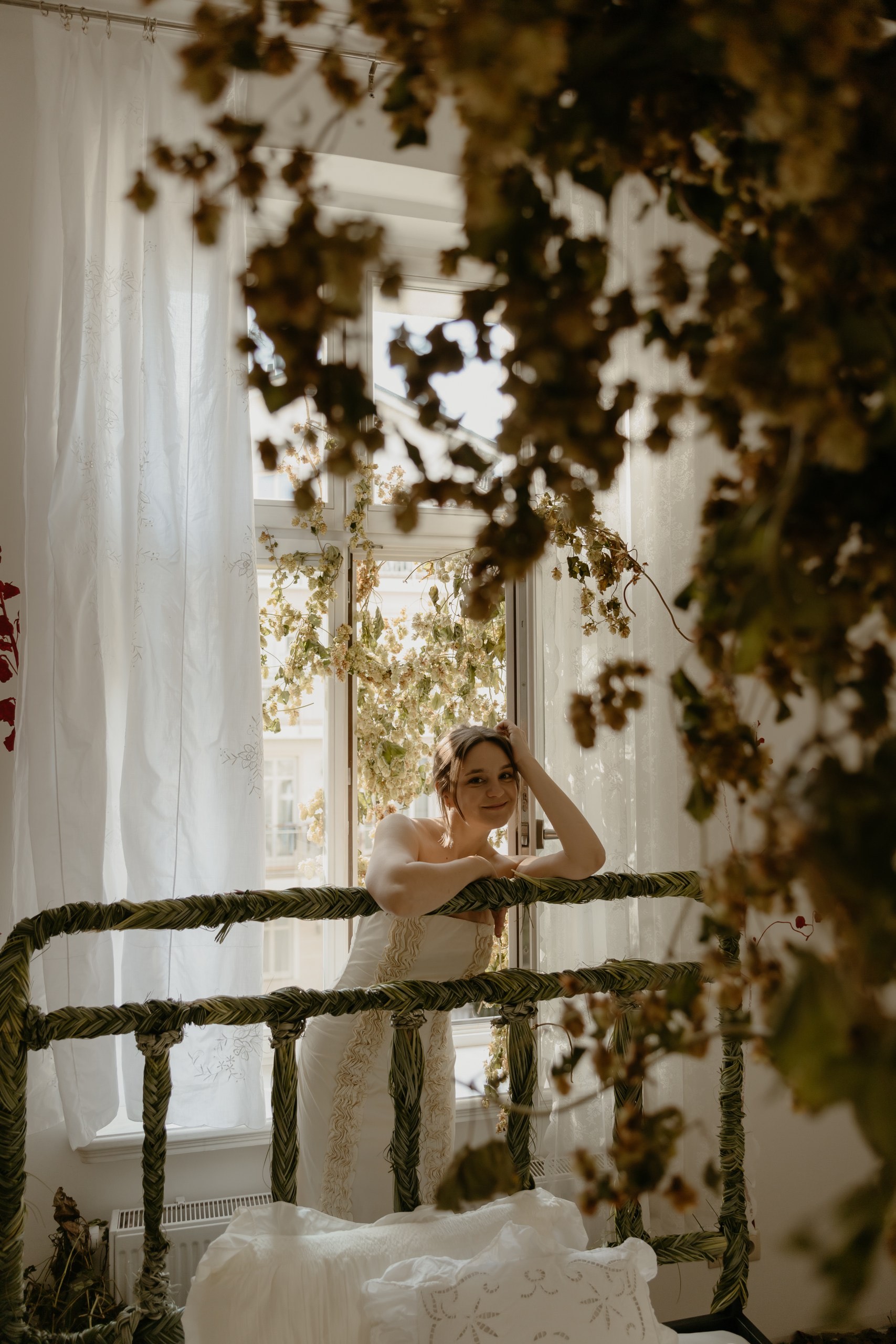
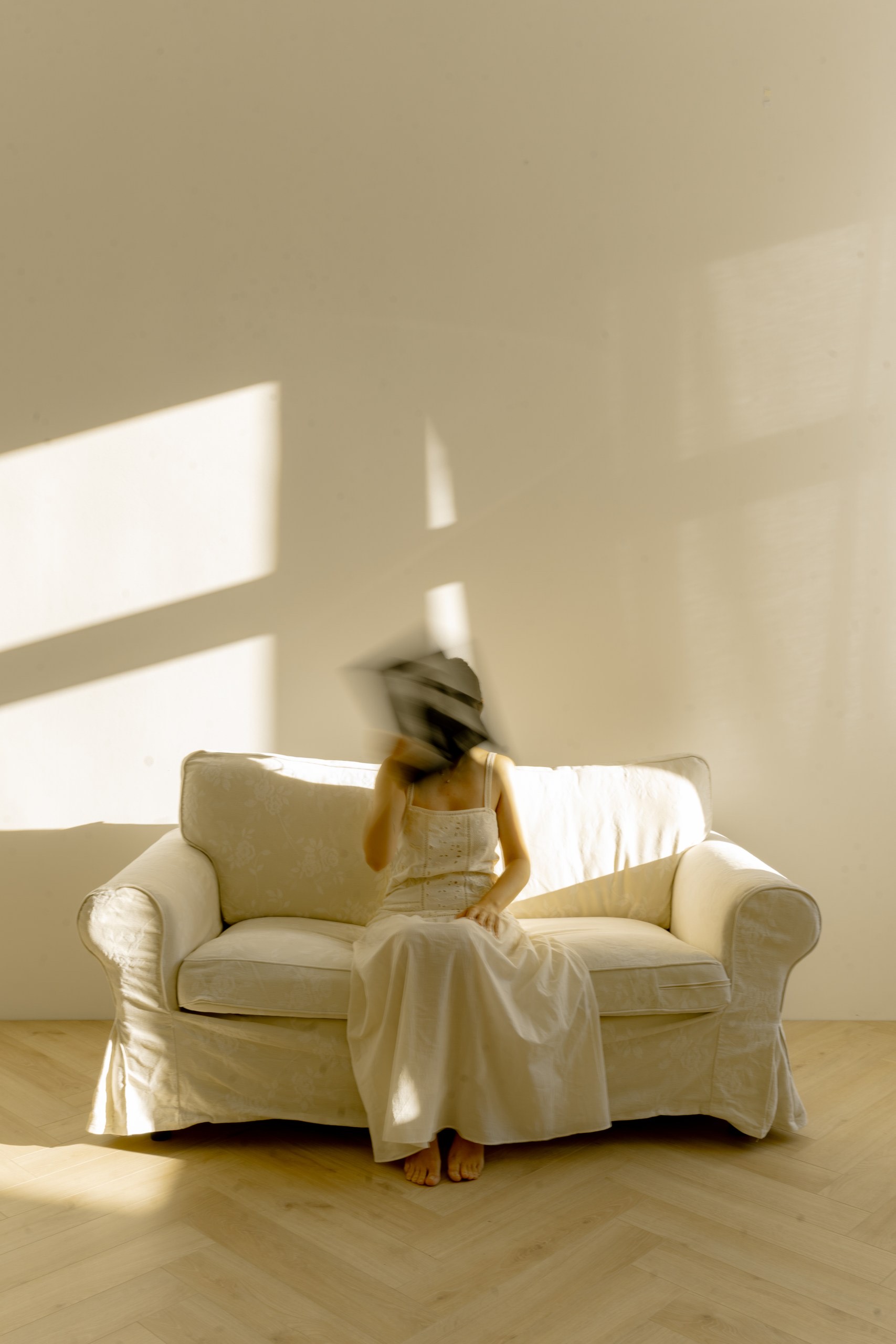
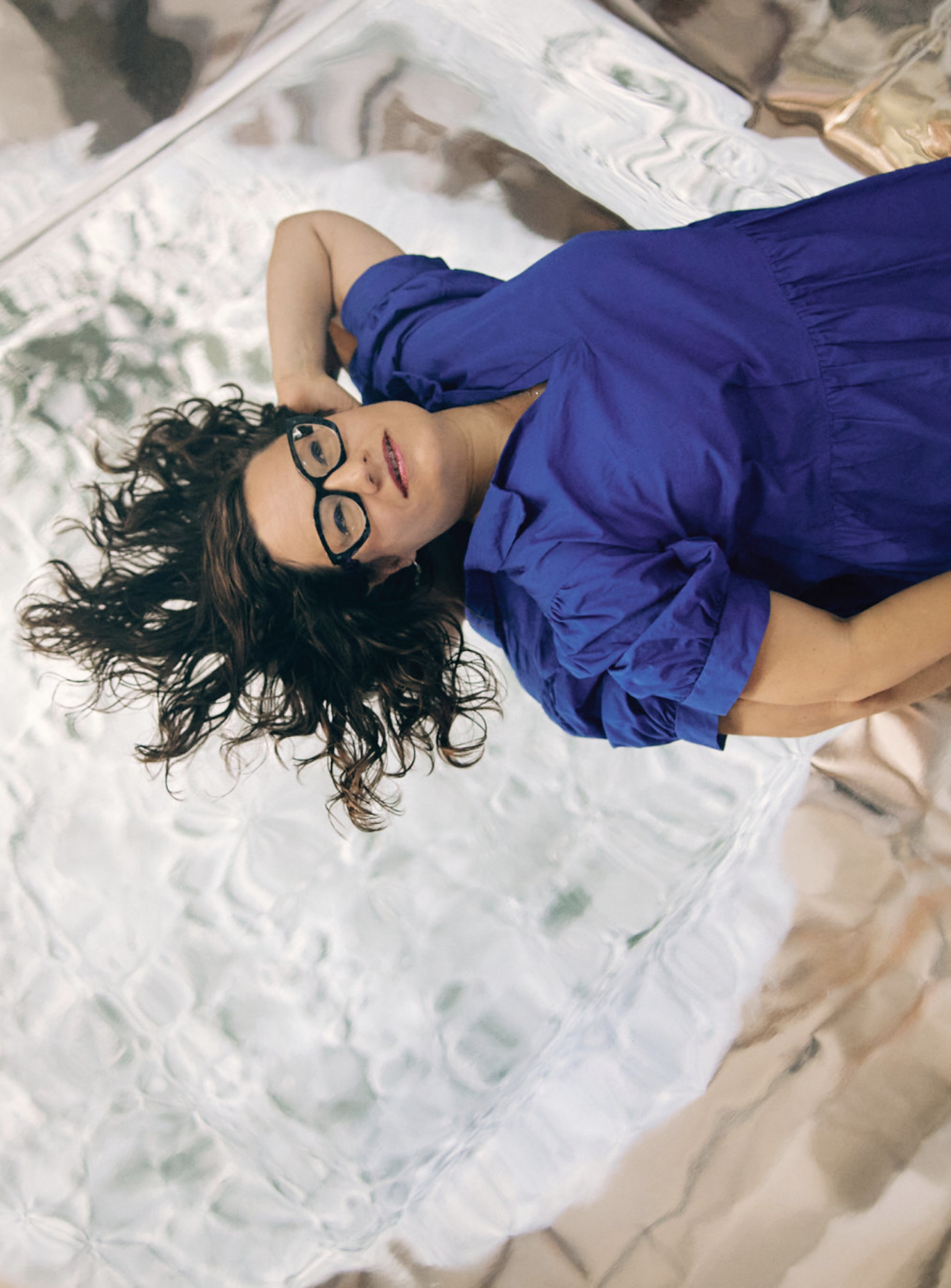
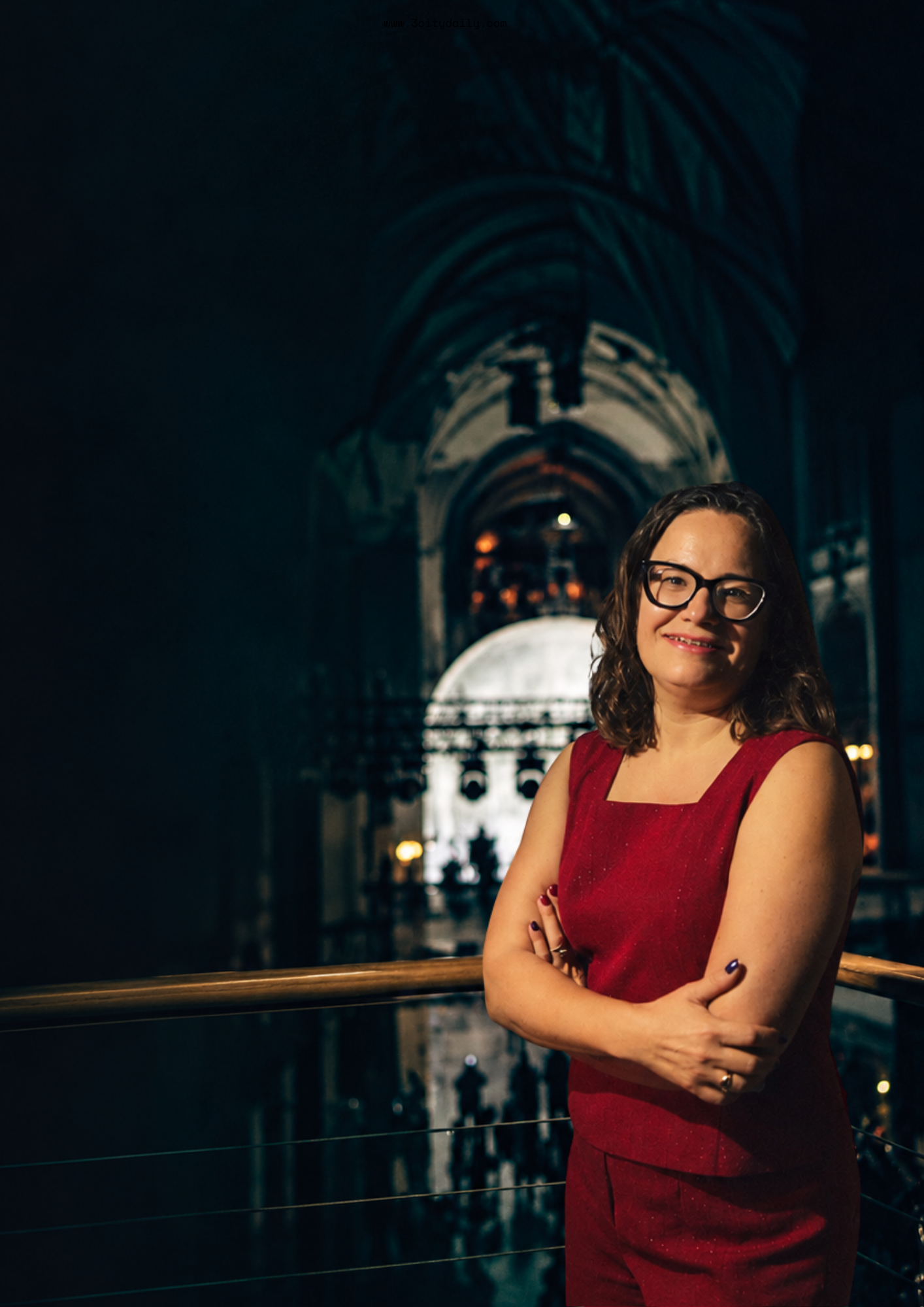
Sopot isn’t exactly short of pretty places, but Palotna is doing something a little different. Hidden inside a beautiful 19th-century building, it’s part photography studio, part creative playground and part meeting place for people with interesting ideas. We caught up with Katia, the woman behind it all, to talk unexpected friendships, flamenco nights, unusual workshops and why running a beautiful space sometimes means carrying bricks in a dress. Oh, and apparently, she’s still waiting for two guests to fall in love and get married.
What’s the secret to making a space feel special rather than just beautiful?
Freedom. Beautiful interiors catch your eye, but feelings stay with you. Our 19th-century building has incredible character, yet it’s the people who bring it alive. I want visitors to leave inspired, connected or simply happy.
Sopot is famous for beaches and nightlife. Where does Palotna fit in?
Sopot has many personalities! You can spend the afternoon on the beach and the evening at an intimate dinner or creative workshop. Our guests love dressing up for events, too. Sometimes everyone deserves to feel like the main character!
What’s the most unexpected thing that’s happened at Palotna?
We’ve danced flamenco, tasted olive oil from wine glasses and held silent tea gatherings. For our birthday, we even made a 15-kilogram cake resembling real soil! But the most meaningful moments are hearing how our events have changed someone’s life.
Before Palotna, who was Katia?
Was creating your own space always the dream?
I’ve always loved creating environments where people can flourish. From volunteering with children to working in HR in IT, that idea followed me everywhere. Palotna simply gave it a physical home, filled with sunlight, flowers and creativity.
Palotna isn’t simply a photography studio. What was your original vision?
I wanted somewhere people could meet, create and inspire each other without being confined to one role. Sopot has so many different personalities, and I wanted Palotna to reflect that same freedom.
Tell us about the new Immersive Garden. Where did the idea come from?
It began with memories of an apple orchard outside my home in Belarus. I realised physical gardens can disappear, but the gardens inside us remain. Graphic and set designer Ekaterina Burlak, bonatical designer Ikebanistka Anka Floral and I brought that philosophy to life for Palotna’s first birthday.
Have any unexpected friendships started at Palotna?
Absolutely! People meet at our events, become friends, go on walks or start creative projects together. You can organise an event, but you can’t organise chemistry. Honestly, all that’s left is for us to get someone married! (Laughs.)
If you could give anyone the keys to Palotna for one night, who gets them?
A complete stranger! No rules, no expectations. I’d return the next morning to discover what happened. Maybe they’d transform the studio or throw the party of their lives. I love the unknown.
If someone made a film about your life, what would surprise the audience most?
That I’m still searching. I have more ideas than time — books to write, projects to create and dreams of expanding Palotna. My mind is constantly building something new. I don’t have all the answers, but I love that my story is still unfolding.
After chatting with Katia, you realise Palotna isn’t really about beautiful interiors. It’s about the people, the unexpected friendships and the wonderfully strange things that happen when creativity takes over. She’s already hosted flamenco nights, silent tea parties and a cake that looked like dirt. Now she’s hoping someone finds love there. And if Palotna ever hosts its first wedding, we’re betting the cake will be the least normal thing about it.
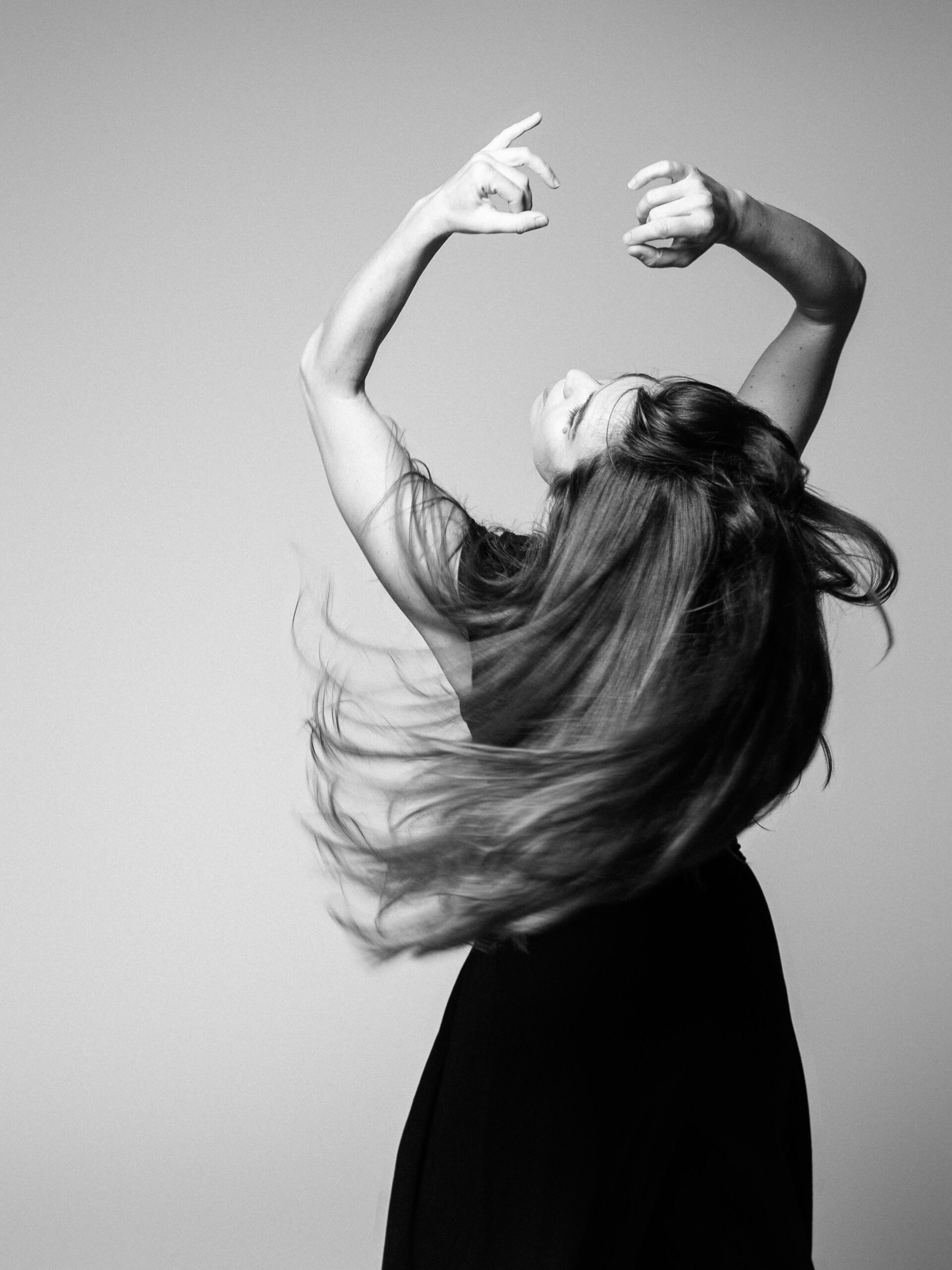
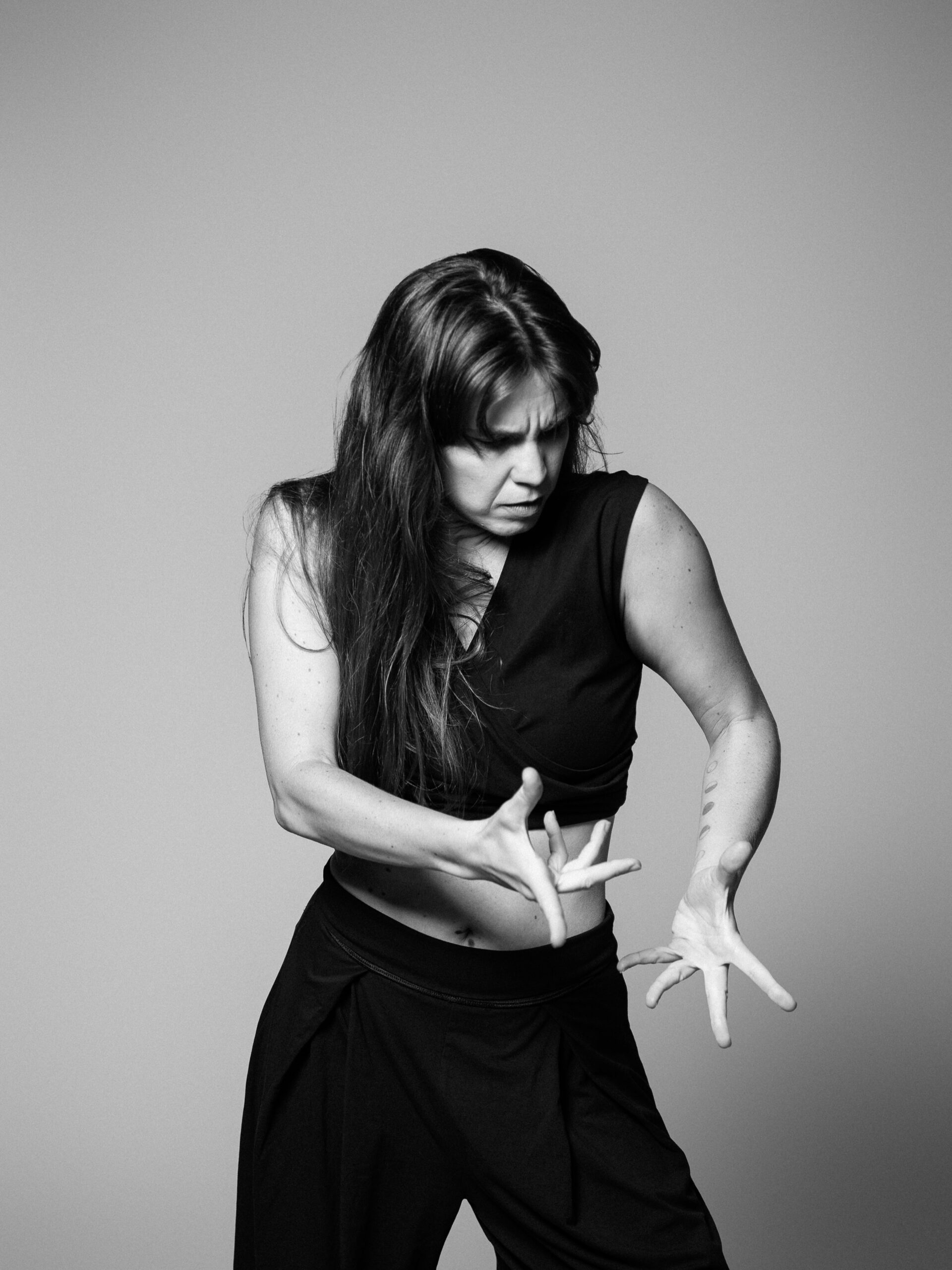
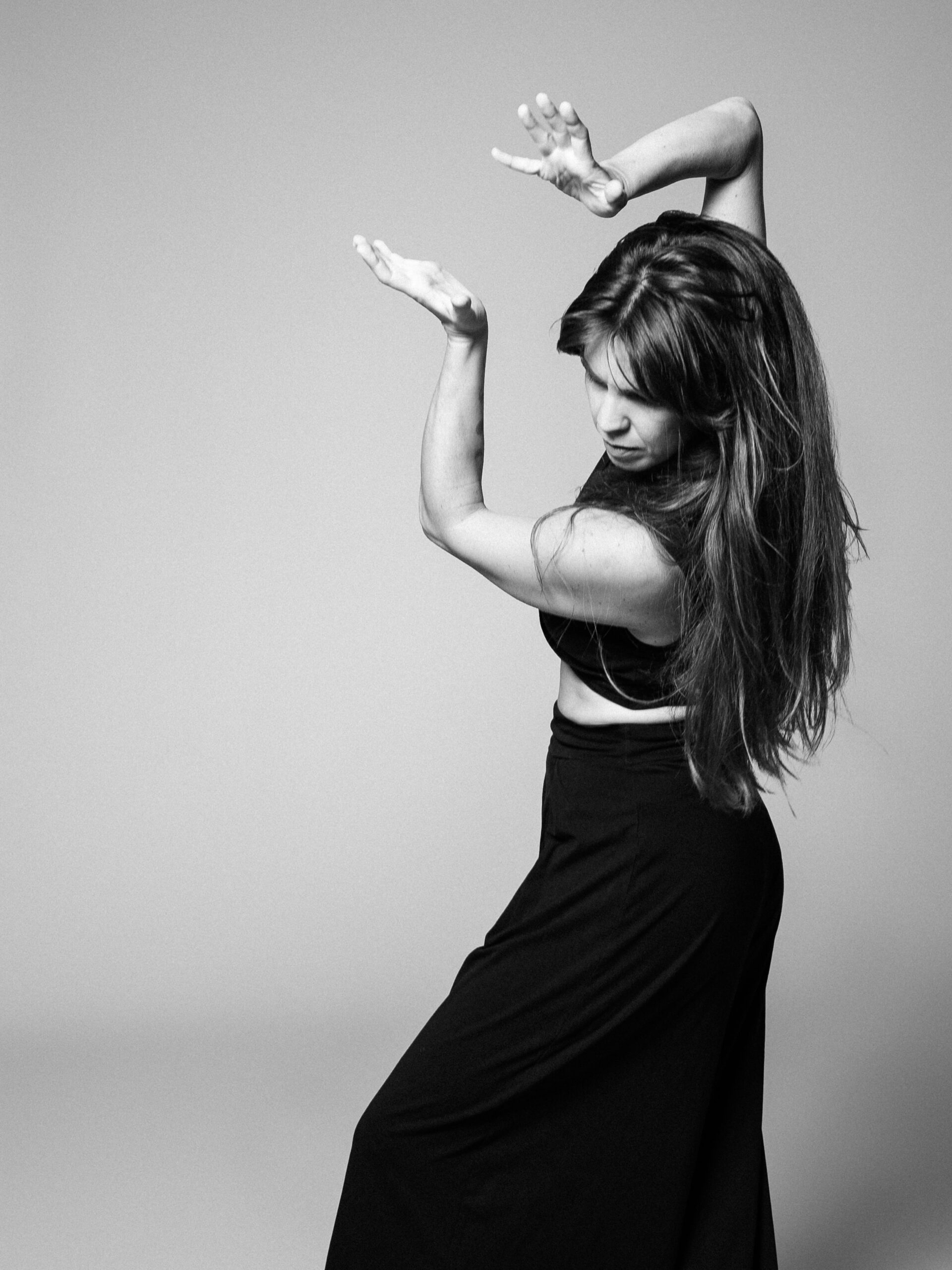
Forget the red dresses and pretty little dance steps. At La Musa, in Gdańsk’s raw shipyard district, Magdalena Jędrzejewska teaches flamenco the way it was meant to be felt — loud, fearless and unapologetically emotional. Anger, heartbreak, passion? Bring it all. Just don’t expect to leave your comfort zone intact. Thanks to https://www.instagram.com/misiamasorz/ for the amazing photos!
You trained as a classical musician. What did flamenco give you?
A connection to my womanhood, my body and its energy. It helped me discover myself and brought incredible women into my life. Like joining a tribe.
What did Spain teach you?
Aire. That indescribable flamenco energy. In Andalusia, people sing, dance, laugh and cry together. You can’t learn that from a textbook. You have to live it.
Can you teach flamenco’s intensity?
Absolutely. One powerful stomp, one strong gesture, and emotions begin to flow. Then we build tension, release it and shout olé!
What about someone with two left feet?
No such thing! Walking is dancing. Talking is music. Everyone has rhythm.
Is performing in Spain intimidating?
Definitely. But Spanish musicians give you incredible support. You’re creating something together.
Biggest flamenco stereotype?
That it’s mainly women dancing. In Andalusia, there are just as many male dancers, sometimes more.
Flamenco in Gdańsk’s industrial shipyard?
Perfect! The raw surroundings become an empty canvas for movement and colour.
Have you danced through heartbreak?
Of course. Flamenco carries grief, anger, sadness, love and happiness. Sometimes all at once.
What can beginners try at La Musa?
Dance, rhythmic clapping, cajón, guitar and even classical piano.
Last one. What would five minutes watching you dance reveal?
That I’m so much more than my words.
After talking to Magdalena, you realise flamenco isn’t really about getting the steps right. It’s about having the guts to let everything out, even the messy bits. And there’s something brilliant about finding all that Andalusian fire among Gdańsk’s old shipyard buildings. As Magdalena says, everyone has rhythm. So if you’ve got two left feet and a little emotional baggage, congratulations. You’re practically halfway there. Olé!
Marta has swapped the music world and boardrooms for the business of shaking up Gdańsk’s cultural scene. Now running the Nadbałtyckie Centrum Kultury, she’s questioning festival fever, challenging the cultural establishment and dreaming of taking Polish art out to sea. We caught up with a woman who respects tradition but isn’t afraid to rock the boat.
You’ve worked in PR, music and business. Was there ever a career plan?
Not exactly a map, more a compass. I’ve always been curious about people and willing to take risks. Every experience gave me something I could use elsewhere. The common thread has always been connecting people and ideas.
You inherited NCK after Lawrence Ugwu’s 20-year leadership. Preserve or reinvent?
Photo by Adalat Naghiyev
Both. Lawrence left an important legacy, but respecting history doesn’t mean repeating it. Culture must respond to a changing world. I’m interested in meaningful development, not change for its own sake.
Can publicly funded culture ever be politically independent?
Public accountability is essential, but political interference in artistic programming is another matter. Independence means protecting creative freedom and remaining faithful to our mission, even when that’s uncomfortable.
Photo by Adalat Naghiyev
You’ve criticised the obsession with festivals and events. Why?
We sometimes confuse activity with cultural significance. Counting concerts and visitors is easy. Measuring whether culture changes someone’s thinking or creates lasting relationships is much harder. We don’t always need more events. We need more meaning.
Photo by Adalat Naghiyev
Has the cultural world become an exclusive club?
That’s a real danger. Culture develops its own language and hierarchies. Accessibility isn’t just about ticket prices. It’s about making people feel welcome, even without specialist knowledge.
What should newcomers to Gdańsk experience at NCK?
Start with a concert at St John’s Centre, then discover the Old Town Hall. You don’t need fluent Polish to connect with culture. Sometimes belonging begins with a shared experience.
Unlimited budget. Complete artistic freedom. What’s your wildest idea?
A sailing ship carrying Pomeranian artists around the Baltic, stopping at ecological marinas, connecting creators, scientists and communities. A cultural expedition asking one question: What does it mean to be Baltic? We know the Mediterranean’s story. It’s time to tell ours.
Marta isn’t interested in filling calendars just to keep everyone happy. She wants culture that challenges, connects and actually means something. And if her dream of taking Pomeranian artists around the Baltic on a sailing ship ever becomes reality, we’ll be watching. Because Marta didn’t take the helm to play it safe. She came to make waves.
⚖️ YOUR VOTE IS IN.Voting closes soon. Look out for the results and our verdict on 3City Daily!
3CITY DAILY / CITY COURT ⚖️
Calling the city to order…
ACCESS GRANTEDWELCOME TO THE OTHER SIDE
3CITY DAILYTHE CITY, UNFILTERED.
3CITY DAILY / DISCOVERY
FIND YOUR CITY.
Pick your cities and categories. Find the story worth opening.
DISCOVERIES
Loading stories…
Some people follow the rules. Others make their own. Gaweł Czajka has never seemed particularly interested in playing it safe. We sat down with the man behind the attitude to talk about life, ambition, the decisions that shaped him and what happens when you stop caring about other people's expectations. No polished PR answers. Just Gaweł, in his own words.