


Gdańsk wants to clean up its historic centre, but restaurant owners fear the city could be about to ruin the very atmosphere that makes people want to visit. With proposed outdoor terrace closing times of 23:00 on weeknights and 01:00 at weekends, the battle over who gets to enjoy Gdańsk after dark is heating up.
Picture this.
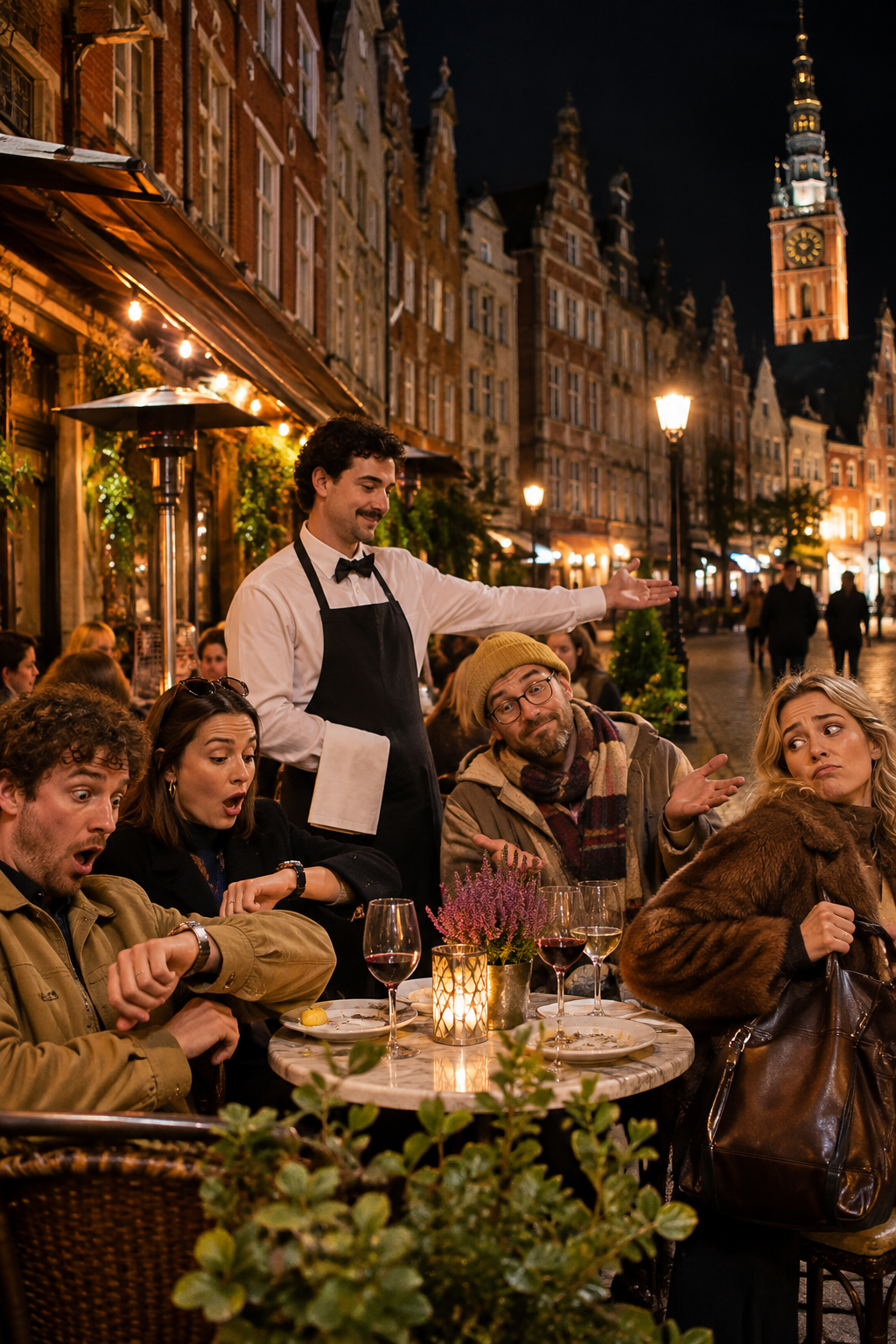
It’s a beautiful summer evening in Gdańsk. You’re sitting outside a restaurant, halfway through your second cocktail, watching people wander through the historic streets.
The atmosphere is perfect. The city’s alive. Nobody’s in a hurry.
And then somebody tells you it’s time to leave.
Not because you’ve had too much to drink. Not because you’ve started singing Polish karaoke at an unreasonable volume.
Because it’s 23:00.
Welcome to the latest argument about the future of Gdańsk’s nightlife.

The City Wants Its Streets Back
Gdańsk is preparing a major shake-up of its historic centre through a proposed Cultural Park known as Park Kulturowy Główne Miasto.
The plan covers much more than restaurant terraces. City officials want to tackle intrusive advertising, aggressive street promotion, cluttered public spaces and other problems that have frustrated residents for years.
Frankly, anyone who’s walked through the centre being approached by somebody promoting a nightclub for the fifth time in ten minutes might understand the appeal.
But buried among the proposed changes is one particularly controversial idea.
Outdoor restaurant terraces would have to close at:
- 23:00 — Sunday to Thursday
- 01:00 — Friday and Saturday
These limits would apply to outdoor terraces in the designated cultural-park area, not automatically force the restaurants and bars themselves to close.
Still, for businesses that depend on outdoor seating during the warmer months, that’s a pretty significant distinction with potentially expensive consequences.
Restaurant Owners Aren’t Exactly Celebrating
Gdańsk’s restaurant industry isn’t taking the proposal quietly.
The Gdańsk Restaurateurs Association has challenged the proposed closing times, arguing that the historic centre remains busy late into the evening.
Its spokesperson, Krzysztof Kopeć, told Radio Gdańsk that pedestrian activity around 23:00 or midnight can be comparable to the afternoon.
In other words, the customers haven’t disappeared.
The city just wants the outdoor tables cleared.
Restaurant owners have requested an additional hour on weekdays, but the city had not agreed to that change in its publicly reported November position.
And there’s a bigger question.
If visitors can’t sit outside after 23:00, where exactly are they supposed to go?
Inside? Somewhere else? Back to their apartments to drink supermarket wine?
Perhaps the last option is good news for Żabka, but probably less exciting for the hospitality industry.
Nearly 3,000 People Backed the Restaurateurs’ Appeal
This isn’t just a handful of bar owners complaining about losing an extra round of drinks.
According to figures presented by the Gdańsk Restaurateurs Association, its appeal attracted 2,962 supporters and 48 businesses.
The association also published research conducted by Opinia24 among 1,000 Gdańsk residents.
In that survey, 89.9% agreed that the historic centre should remain somewhere residents and tourists can enjoy restaurants, cafés and outdoor terraces in the evening.
And 55.8% supported terraces operating without restrictions on opening hours.
Those are findings from research commissioned and presented by the restaurant association, rather than an official referendum.
Nevertheless, they suggest that the appetite for a lively city centre extends beyond the people selling the cocktails.
But What About the People Who Actually Live There?
Here’s where things become more complicated.
Gdańsk’s historic centre isn’t just a playground for tourists and weekend visitors.
People live there.
And while a lively terrace sounds wonderful when you’re enjoying a drink, it becomes considerably less charming when you’re trying to sleep above it.
Nobody wants to spend every summer night listening to somebody celebrating their third stag party of the weekend.
The city’s argument is that Gdańsk needs rules that protect residents, improve public spaces and prevent its historic streets from becoming a free-for-all.
The proposed cultural park would also tackle street touts, intrusive advertising and certain forms of commercial activity.
Some of those changes could make the centre more attractive for everyone.
The real question is whether earlier terrace closing times are the right way to achieve that.
Is Gdańsk Becoming Too Polished for Its Own Good?
Cities are strange creatures.
We travel to places because they’re lively, unpredictable and full of character.
Then we complain when they become noisy, crowded and chaotic.
So the authorities introduce rules.
And suddenly everybody starts worrying that the place is losing its soul.
Gdańsk has spent years building its reputation as one of Poland’s most attractive city-break destinations.
Its restaurants, bars and outdoor terraces are part of that appeal.
But preserving a city’s atmosphere doesn’t mean allowing absolutely anything to happen.
There’s a difference between enjoying a late-night glass of wine and having a drunken argument underneath somebody’s bedroom window.
Surely a city as sophisticated as Gdańsk can work out the difference.
So What’s Actually Happening Next?
The cultural-park proposal was being prepared for consideration by Gdańsk City Council during its November session.
At the time of writing, we have not confirmed that the council has adopted the proposed terrace closing hours.
The city has indicated that, if adopted, the regulations would be published officially, with most provisions taking effect after a short transition period. Some other changes would have longer adjustment deadlines.
For now, the proposed terrace curfew remains exactly that: a proposal.
And the debate is far from over.
Our Verdict? Don’t Turn Gdańsk Into a Museum That Serves Cocktails
At 3City Daily, we’re all for protecting residents from excessive noise, cleaning up ugly advertising and getting rid of aggressive street promoters.
But there’s something special about sitting outside on a warm Gdańsk evening, surrounded by conversation, music and the unmistakable atmosphere of a city enjoying itself.
That deserves protecting too.
The challenge isn’t choosing between residents and restaurants.
It’s finding rules that allow both to exist without making everybody miserable.
Because Gdańsk should be somewhere people want to live.
And somewhere people want to go out.
Preferably without having to choose one or the other.
Leave a Reply